Book now


What Happens During Your Baby’s First Dental Visit

What Happens During Your Baby’s First Dental Visit
Many Tinley Park parents feel nervous before their baby’s first dental visit. That uncertainty is completely normal. Understanding what happens during your baby’s first dental visit in Tinley Park can ease that anxiety right away. At Joyful Smiles Pediatric Dentistry of Tinley Park, Dr. Yaa McDonald and her team make every step gentle, clear, and comforting for both you and your child.
When Should Your Baby Have a First Dental Visit in Tinley Park?
The American Academy of Pediatric Dentistry recommends scheduling your child’s first visit by their first birthday. You can also book one when the first baby tooth appears. Many Tinley Park families wait too long, which can lead to missed early concerns. Starting early gives Dr. McDonald a chance to catch small issues before they grow.
Early visits also help babies get used to the dental environment. A familiar, friendly office makes future visits much easier. Children who start young tend to feel far less dental anxiety as they grow. Building that comfort early is one of the best gifts you can give your child’s oral health.
Step-by-Step: What Happens During the Visit
Knowing what to expect helps parents and babies feel ready. Here is a clear, step-by-step look at what the appointment involves at Joyful Smiles Pediatric Dentistry of Tinley Park.
- Warm Welcome: The front desk team greets you and your baby in a calm, child-friendly space. There is no rush. The team takes time to help your little one feel at ease.
- Health History Review: Dr. McDonald or a team member reviews your baby’s health history. They ask about feeding habits, sleep routines, and any concerns you have noticed. This gives the team important context before the exam begins.
- Knee-to-Knee Exam: For very young children, Dr. McDonald uses a special knee-to-knee position. You sit facing the doctor, and your baby lies with their head in Dr. McDonald’s lap. This keeps your baby feeling safe and close to you throughout the exam.
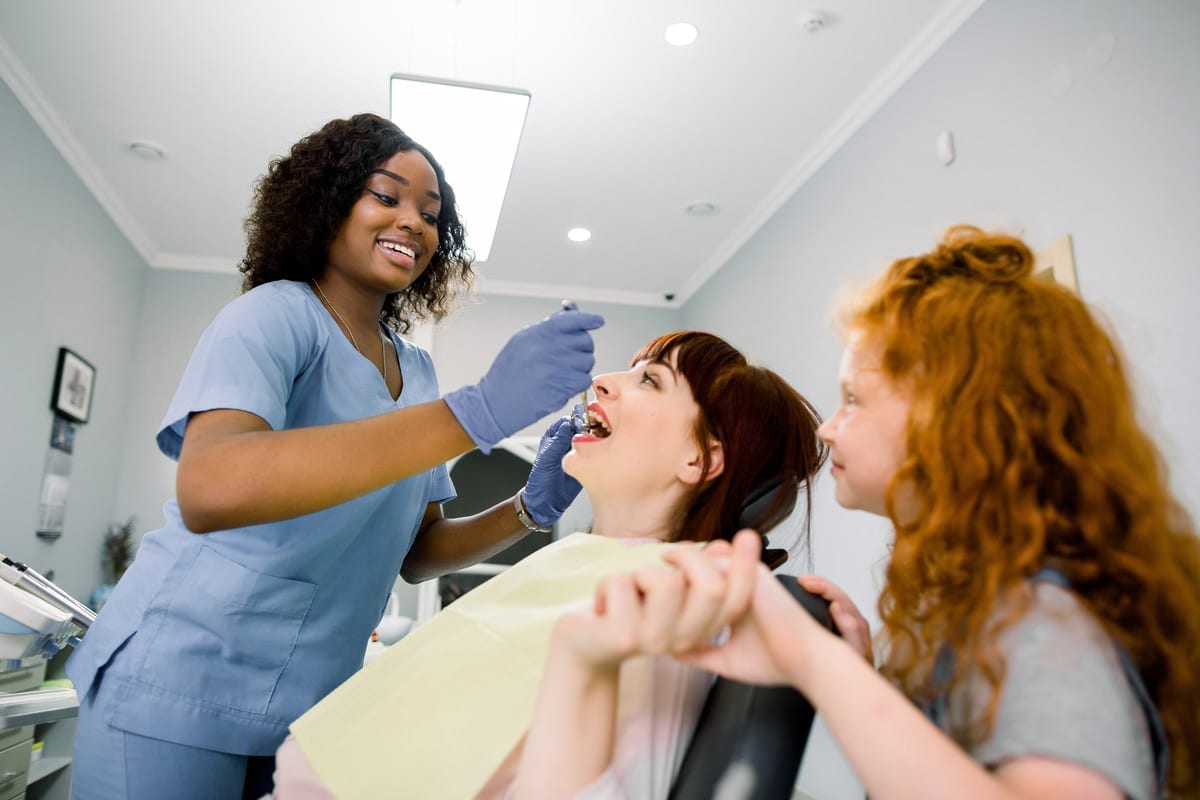
- Gentle Oral Exam: Dr. McDonald carefully checks your baby’s gums, jaw, and any teeth that have come in. She looks for early signs of tooth decay, gum concerns, and proper development. The exam is quick and uses only soft, child-sized tools.
- Gentle Cleaning: If your baby has teeth, a gentle cleaning removes any plaque buildup. The team uses soft instruments that will not startle or hurt your child. Many babies are surprised by how easy this part feels.
- Fluoride Application (if appropriate): Dr. McDonald may recommend a quick fluoride treatment to strengthen developing teeth. This takes only seconds to apply. It is one of the simplest ways to protect your baby’s smile early on.
- Parent Education Session: This is one of the most valuable parts of the visit. Dr. McDonald shares personalized tips for brushing, feeding, and cavity prevention at home. You leave with real, practical guidance for your child’s specific needs.
What Your Baby Will Feel During the Exam
Parents often worry about how their baby will react. Most babies are curious rather than distressed. The tools Dr. McDonald uses are small and designed specifically for tiny mouths. The team moves slowly and narrates each step in a calm, soothing voice.
Some babies fuss briefly, and that is perfectly okay. The team at Joyful Smiles is trained to handle tears with patience and warmth. Dr. McDonald never rushes through a visit just to finish quickly. Your baby’s comfort always comes first.
If your child shows signs of dental anxiety, the team has gentle strategies to help. Distraction techniques, soft lighting, and a friendly tone all make a real difference. Many parents are amazed at how smoothly the visit goes once it begins.
What Dr. McDonald Checks and Why It Matters
The first dental visit covers more than just counting teeth. Dr. McDonald looks at several key areas of your baby’s oral development.
- Tooth eruption patterns: Are teeth coming in at the right time and in the right positions?
- Gum health: Healthy gums form the foundation for strong baby teeth.
- Early decay signs: White spots or discoloration can signal the very start of a cavity.
- Bite development: Early bite issues are easier to address when caught young.
- Oral habits: Thumb sucking and pacifier use can affect tooth alignment over time.
- Jaw and tissue health: Dr. McDonald checks for tongue ties and other soft tissue concerns.
Catching issues at this stage can prevent the need for more complex care later. For example, untreated decay in baby teeth can sometimes require Root Canal Therapy For Children Tinley Park if left unaddressed for too long. Early visits make it possible to avoid that outcome in most cases.
Tips to Help Your Baby Have a Positive First Visit
A little preparation at home goes a long way. These simple steps can help your baby feel more comfortable on the day of the appointment.
- Schedule the visit during your baby’s most alert and happy time of day.
- Read a children’s book about visiting the dentist in the days before the appointment.
- Use positive, cheerful language when talking about the visit at home.
- Bring a favorite small toy or comfort item for the waiting room.
- Stay calm yourself — babies pick up on parental anxiety very quickly.
- Avoid using words like
Frequently Asked Questions
At what age should I schedule my baby’s first dental visit?
The American Academy of Pediatric Dentistry recommends scheduling your baby’s first dental appointment by their first birthday or within six months of their first tooth appearing, whichever comes first. This early visit allows the dentist to monitor oral development and give you personalized teething guidance for your baby’s specific needs.
What can I do to soothe my baby’s teething pain at home?
You can offer a clean, damp washcloth or a refrigerated (not frozen) teething ring for your baby to chew on, which provides gentle pressure relief. Gently rubbing your baby’s gums with a clean finger can also help ease discomfort, and your pediatric dentist can recommend safe over-the-counter pain relief options if needed.
Is it normal for my baby to have a fever while teething?
While teething can cause mild gum inflammation and discomfort, a high fever is not directly caused by teething and may indicate another issue. If your baby develops a fever during the teething period, contact your pediatrician to rule out infection or other conditions.
How can I prepare my baby for their first dental visit?
Keep the experience positive by using simple, calm language to explain the visit and avoiding words like “pain” or “shot.” Arriving early to let your baby get comfortable with the office environment and having the dentist show them the tools beforehand can help reduce anxiety.
When will my baby’s teeth start coming in, and in what order?
Most babies’ bottom front teeth (central incisors) appear first around 6-10 months, followed by top front teeth around 8-12 months. However, every baby develops at their own pace, and the exact timing can vary—your pediatric dentist will monitor your baby’s individual timeline during their visits.

Let's explore the magical world of healthy
smiles together
Joyful Smiles Pediatric Dentistry is accepting new patients - infants, toddlers and adolescents all welcome! Dr. Yaa McDonald and team offer a complete suite of services including customized smile makeovers. Call us today to schedule an appointment.